



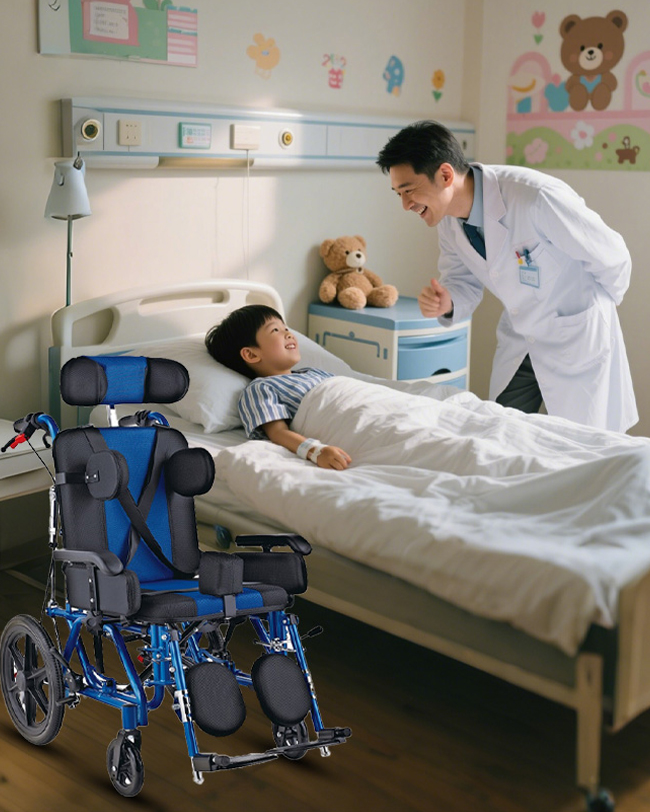

When mobility declines—due to aging, illness, or injury—everyday tasks like using the bathroom become challenging. Commode chairs offer a practical, dignified solution. But with so many options, how do you choose?
This guide breaks down the seven main types, explaining what each does, who it's for, and what to consider before buying.
Why Commode Chairs Matter
A commode chair is essentially a portable toilet for bedside, shower, or anywhere a standard toilet is out of reach. It reduces the risk of falls—the leading cause of injury among adults over 65—by eliminating dangerous late-night trips to the bathroom.
Beyond safety, these chairs restore independence and dignity. Users manage their needs without waiting for assistance, and caregivers face less physical strain.
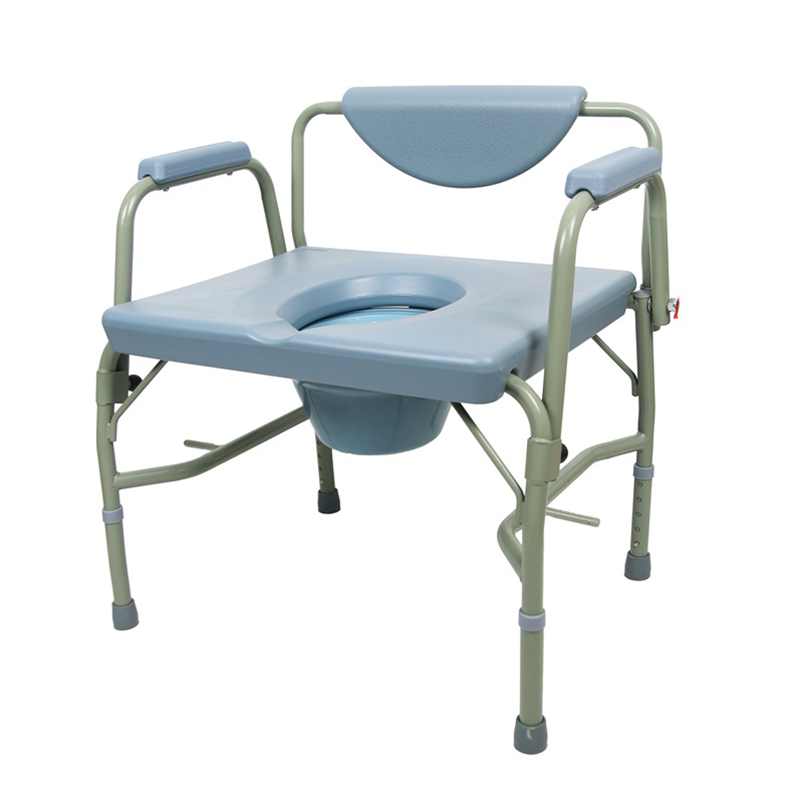
1. The Stationary Workhorse: Simple, Sturdy, and Dependable
The stationary commode is the most basic type. It features a sturdy frame, a seat with an opening, and a removable bucket underneath. No wheels—it stays in one place, typically beside a bed.
Key Features:
·Stability: No moving parts means it won't shift or roll during use.
·Affordability: Typically $50–$100, the most budget-friendly option.
·Discreet Designs: Some models resemble ordinary furniture, preserving dignity in home settings.
·Height Adjustability: Legs can often be adjusted to match the user's height for easier transfers.
Best For: Users who need a fixed toileting solution in one location, such as bedside care in homes, hospitals, or facilities.
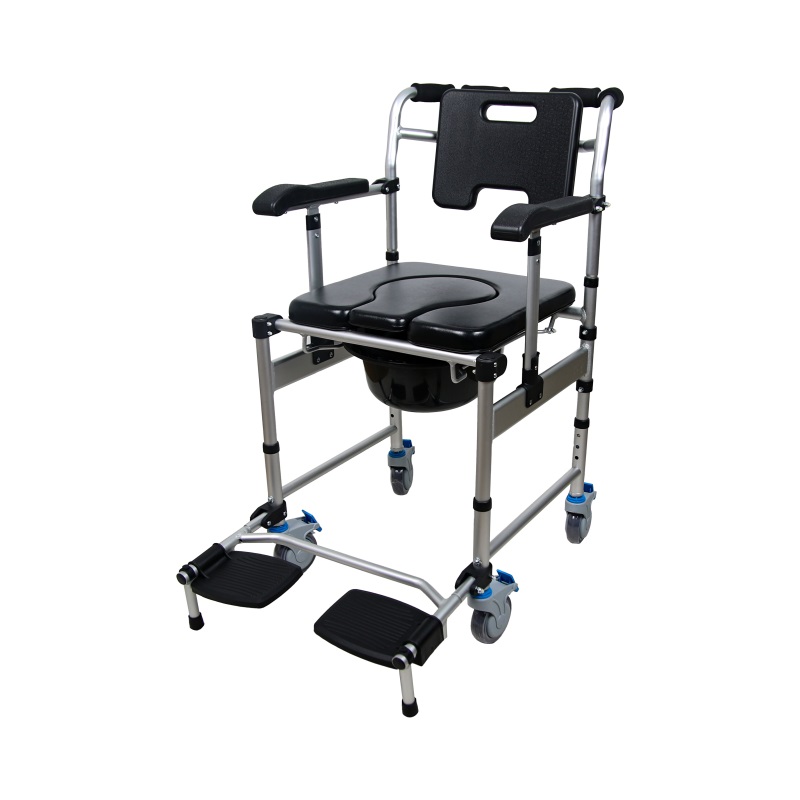
2. On-the-Go Mobility: Why Wheels Make All the Difference
A mobile commode chair adds castors (small wheels) to the basic design, transforming it into a versatile, movable unit.
Key Features:
·Lockable Castors: Four swiveling wheels with brakes ensure safety during use.
·Versatility: Can be used with a bucket or, with the bucket removed, rolled directly over a standard toilet as a raised seat.
·Caregiver-Friendly: Push handles allow easy movement from bed to bathroom without transferring the user to a separate wheelchair.
Best For: Users who need assistance moving between rooms or homes where space is limited and the chair needs to be stored away.
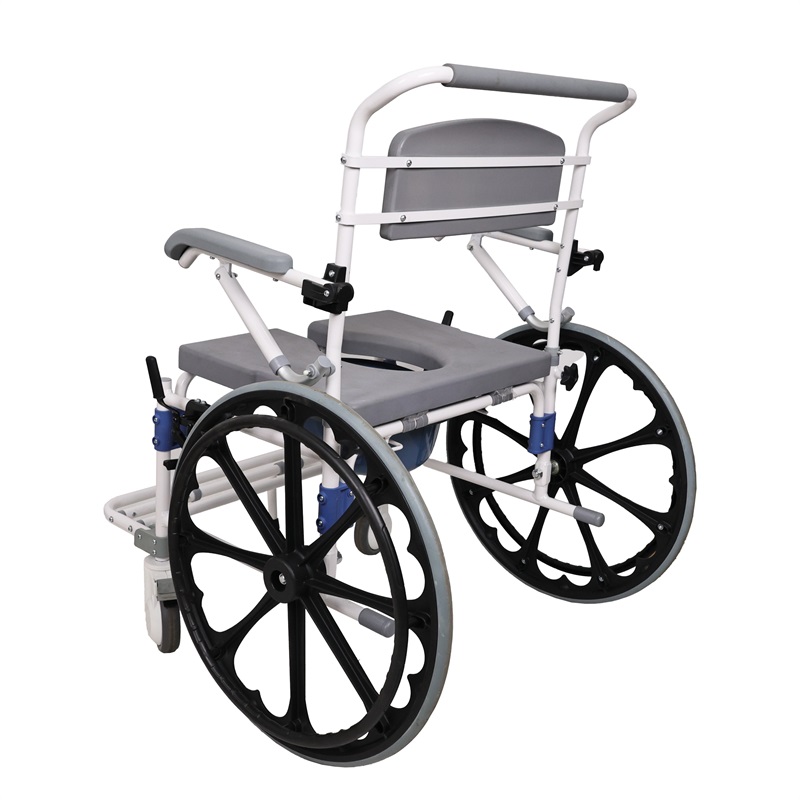
3. Take the Wheel: Self-Propelled Chairs for Independent Users
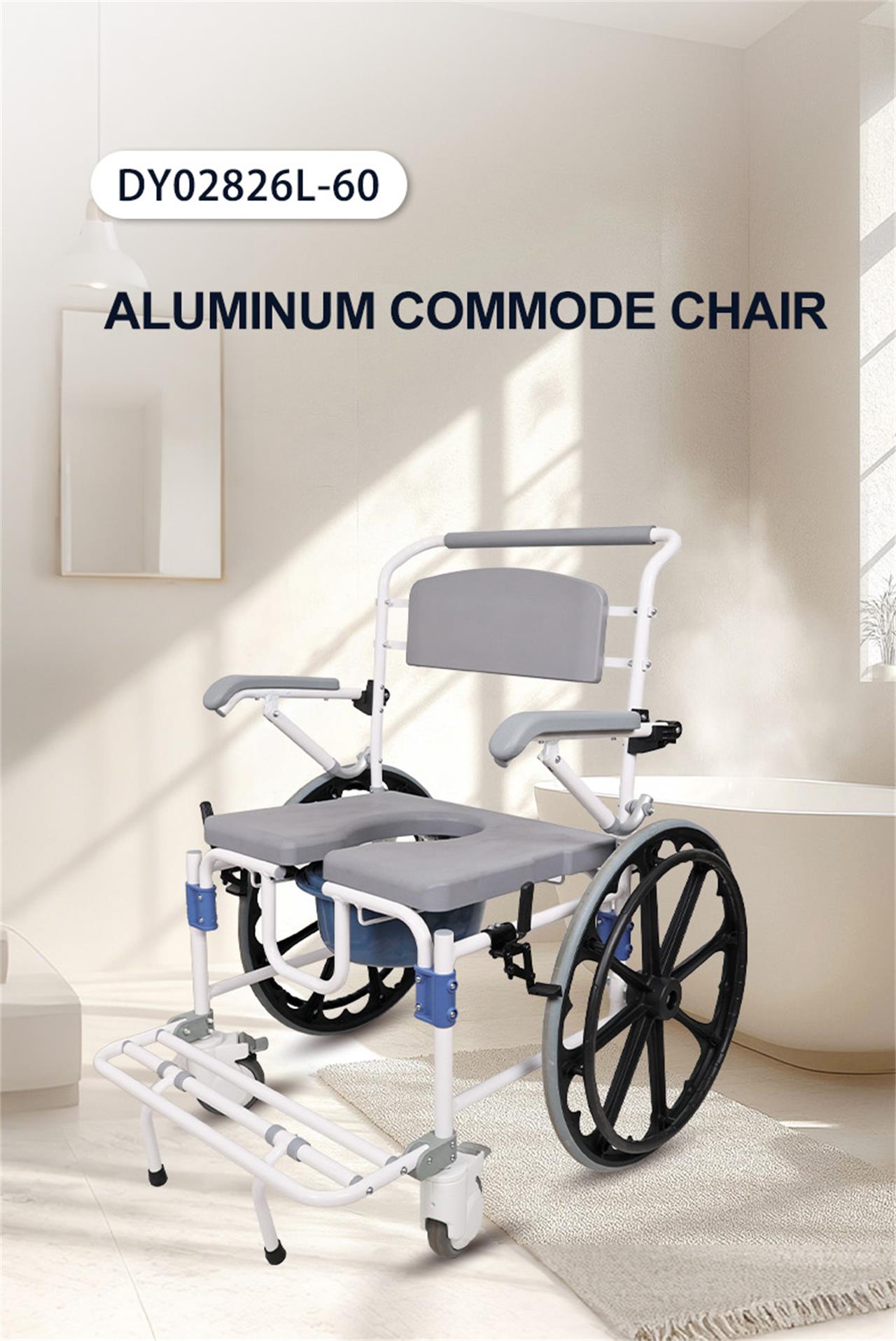
Self-propelled commode chairs (often called commode wheelchairs) are designed for users to move themselves.
Key Features:
·Large Rear Wheels: Equipped with hand rims, allowing the user to propel forward and backward independently.
·Corrosion-Resistant Materials: High-quality models use molded plastic components with no welded seams, ideal for wet environments.
·Open Rear Design: Some models feature an open seat at the back, simplifying hygiene and cleaning.
Best For: Users with adequate upper body strength who want independence and can move without caregiver assistance, especially in wet room settings.
4. Wet and Wild: The Shower-Commode Hybrid You Didn't Know You Needed
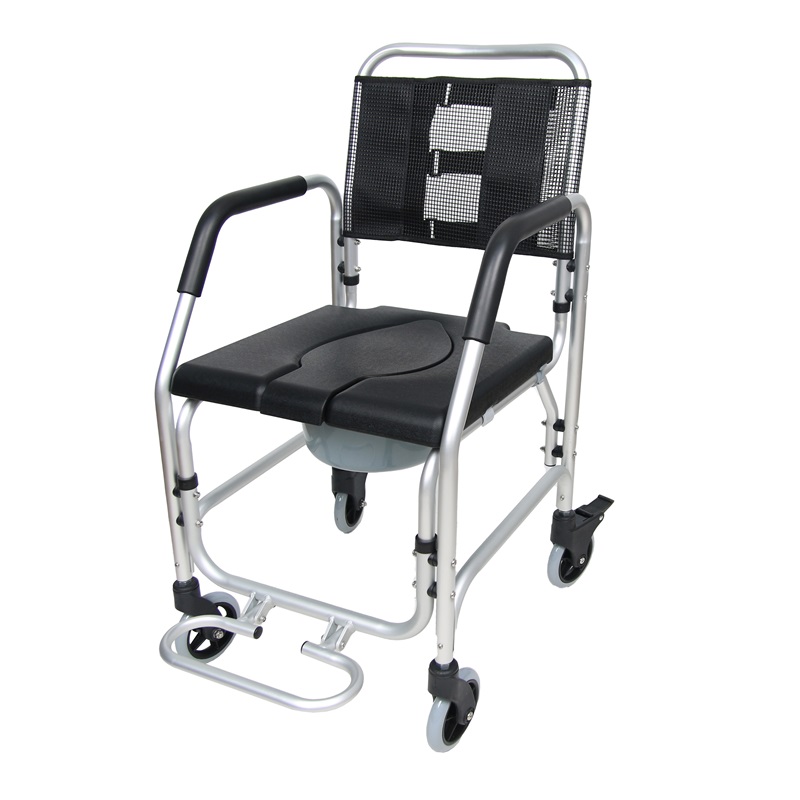
A shower commode chair is built for wet environments, combining the functions of a shower chair, commode, and often a transport chair into one unit.
Key Features:
·Waterproof Materials: Frames are typically corrosion-resistant aluminum or stainless steel; seats are waterproof PU or plastic for easy cleaning and sanitizing.
·Drainage Design: Open or mesh seating allows water to drain, preventing pooling.
·Multifunctionality: Many 3-in-1 or 4-in-1 models serve as bedside commode, shower chair, transport chair, and raised toilet seat over a standard toilet.
·Lightweight & Hygienic: Aluminum frames are watertight, quick to wipe down, and resistant to bacteria and mildew.
Best For: Users needing assistance with both toileting and bathing, especially in wet rooms or small bathrooms where space is limited.
5. Recline and Align: How Tilt-in-Space Chairs Protect Skin and Posture
Tilt-in-space chairs represent the highest level of clinical support. Unlike standard recliners, the entire seating unit moves as one piece—hips and knees maintain their angle while the chair tilts backward.
Key Features:
·Pressure Relief: Tilting redistributes body weight across a larger surface area, preventing and managing pressure ulcers (bedsores).
·Postural Support: Maintains stable seated posture, beneficial for users with low muscle tone, spasms, or involuntary movements.
·Gas-Assisted Tilt: Caregivers can tilt smoothly with minimal physical effort, reducing injury risk. Some chairs offer up to 35 degrees of tilt.
·Adjustable Components: Often includes headrests, footrests, and armrests for optimal positioning; open back straps improve washing access.
Best For: Users with complex needs requiring significant postural support, pressure relief, or assistance with personal care, especially in long-term care settings.
6. Built Bigger, Built Stronger: Bariatric Commode Chairs That Deliver Stability
Bariatric commode chairs are engineered for larger or heavier individuals, providing safe, comfortable, and dignified toileting and showering.
Key Features:
·Higher Weight Capacity: Supports significantly more weight than standard models—ranging from 254 kg (40 stone) up to 340 kg (750 lbs).
·Wider Seats: Broader seating for comfort, with widths from 63.5 cm to 76 cm.
·Reinforced Frames: Heavy-duty steel or high-tech lightweight tubing ensures durability under heavy loads.
·Transfer Ease: Swing-away or removable armrests facilitate side transfers from bed or wheelchair; height-adjustable push handles aid caregiver maneuverability.
·Doorway Compatibility: Despite their size, many models fit through standard doorways and can serve as bedside, shower, or over-toilet chairs.
Best For: Larger or heavier users who need high-capacity stability and safety for both user and caregiver.
7. Push-Button Comfort: When Electric Commode Chairs Make Life Easier
Electric commode chairs incorporate powered mechanisms to adjust height, tilt, or both, offering the ultimate in ease of use.
Key Features:
·Powered Height Adjustment: Raises to transfer height and lowers for safe toileting—invaluable for users with difficulty standing.
·Powered Tilt: Smooth, effortless repositioning at the touch of a button, ideal for users needing frequent position changes.
·Reduced Caregiver Strain: Automates lifting and tilting, significantly lowering the risk of back injuries for caregivers at home or in professional settings.
Best For: Users who need frequent repositioning and caregivers who want to minimize the physical demands of care—a premium option for complex needs.
Choosing the Right Chair: A Simple Checklist
1. Assess the User's Mobility:
- Can they stand or transfer independently? → Consider self-propelled or mobile commode.
- Need full assistance? → Look for a mobile chair with lockable castors and removable armrests.
2. Consider Primary Use:
- Bedside toileting only? → Stationary or mobile commode works.
- Bathing and showering? → Choose a shower commode chair with waterproof materials.
- Both? → A shower commode that also transports is ideal.
3. Evaluate Caregiver Needs:
- Frequently moved? → Lightweight aluminum frames and lockable castors.
- Used for lifting/repositioning? → Tilt-in-space or powered chair reduces strain.
4. Measure the Space:
- Fit through doorways? → Check overall width.
- Limited storage? → A folding commode saves space.
5. Factor in Budget:
- Prices range from under $100 for basic models to several hundred for bariatric or electric chairs. Balance features with cost.
Choosing the right commode chair depends on a careful evaluation of the user's physical capabilities, care environment, and budget. From the simple reliability of a stationary model to the advanced clinical support of a tilt-in-space chair and the independence of a self-propelled wheelchair, there is a solution for virtually every need.
Understanding each type's unique features helps you make an informed choice that enhances safety, preserves dignity, and improves quality of life. The right commode chair is not just medical equipment—it's a tool for independence, comfort, and compassionate care.