

1. Defining the Knee Walker: What Exactly Is This Device?
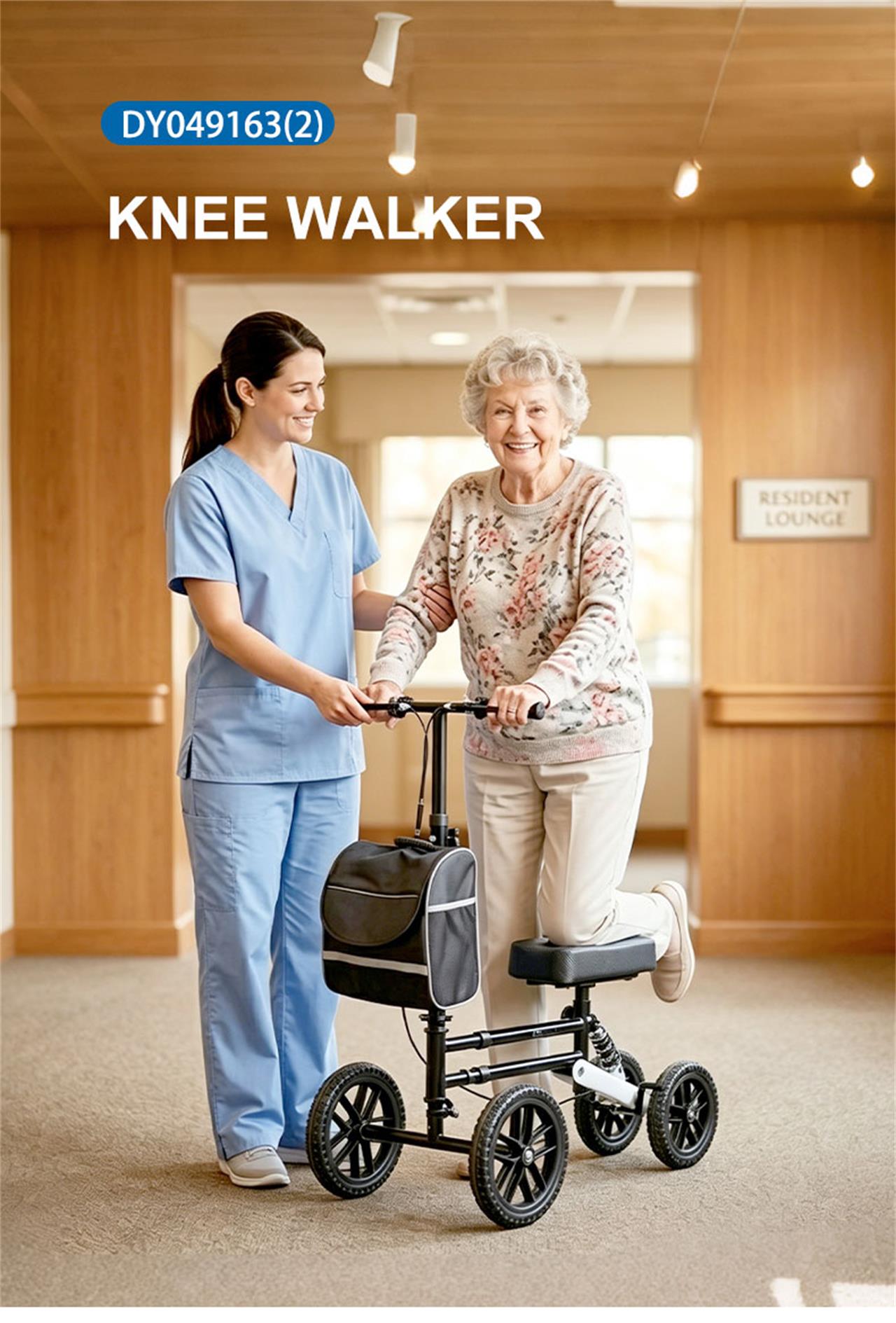
A knee walker—also referred to as a knee scooter—is a wheeled mobility aid designed for individuals recovering from lower leg injuries or surgeries that require non-weight-bearing status. Unlike traditional crutches that transfer weight through your arms and underarms, a knee walker allows you to rest your injured leg securely on a padded platform while using your healthy leg to propel yourself forward.
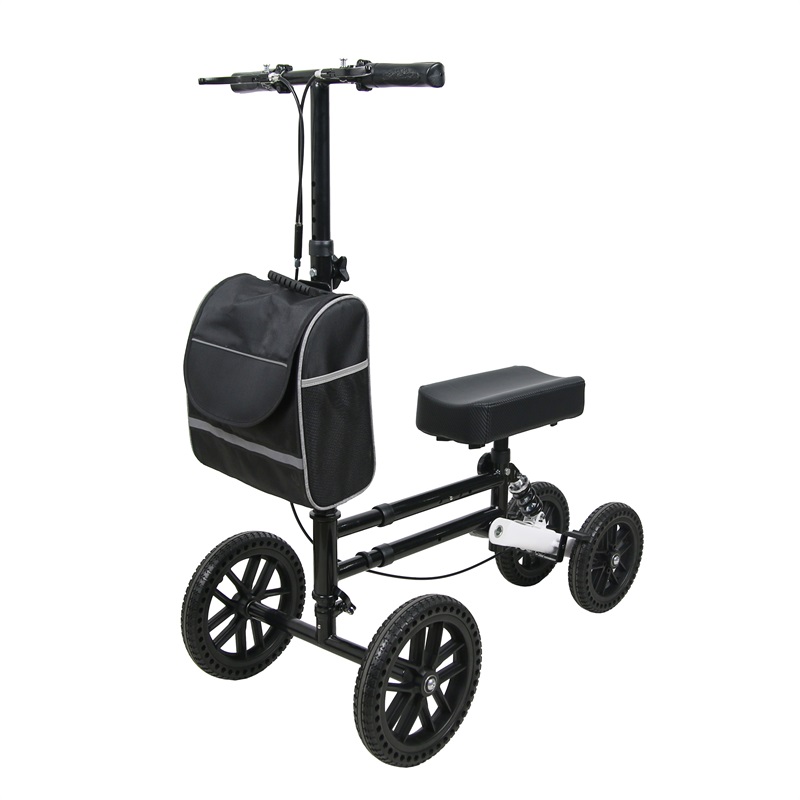
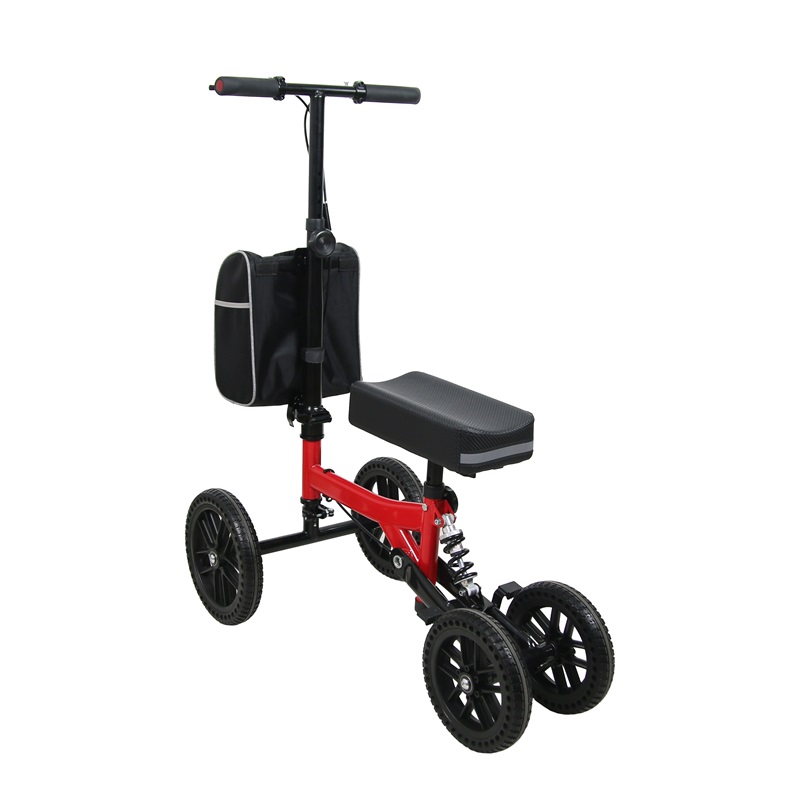
Key Components:
- Padded knee platform with removable cushions
- Adjustable handlebars with hand brakes
- Four-wheel base for stability
- Storage basket for personal items
- Parking brake mechanism
- Adjustable height settings
The fundamental principle is simple: your injured foot or ankle remains completely elevated and protected, while your good leg does all the work. This design eliminates upper body strain, underarm chafing, and balance challenges that make crutches so difficult for many patient
2. Who Benefits Most? The Ideal Candidates for a Knee Walker
Knee walkers serve a specific but significant population. Understanding whether you qualify is essential for making an informed decision.
Primary Candidates:
Foot Injuries:
- Metatarsal fractures and broken toes
- Post-bunion surgery recovery
- Foot reconstruction procedures
- Severe sprains requiring offloading
Ankle Conditions:
- Fractures and severe sprains
- Achilles tendon tears or post-surgical recovery
- Ankle fusion procedures
Lower Leg Injuries:
- Stress fractures of the fibula
- Soft tissue injuries below the knee
- Post-operative recovery from ankle or foot procedures
When a Knee Walker Is NOT Suitable:
- Knee injuries (requires kneeling on the injured leg)
- Femur fractures (different weight-bearing restrictions)
- Hip replacements (different mobility requirements)
- Individuals with poor balance or coordination
Clinical Evidence:
A 2022 study of 62 foot and ankle patients revealed a satisfaction score of 88.8 out of 100 for knee walker users, compared to just 27.5 for crutch users. Remarkably, 93.5% of patients preferred the knee walker, and no falls occurred during knee walker use versus two falls among crutch users.
3. Knee Walker vs. Crutches: A Side-by-Side Comparison
The choice between a knee walker and crutches can dramatically impact your comfort, safety, and quality of life.
| Feature | Knee Walker | Crutches |
| Upper Body Strain | None | High—requires arm, shoulder, wrist strength |
| Comfort | Padded knee platform | Underarm and wrist pain common |
| Stability | Four-wheel base | Less stable; higher fall risk |
| Energy Use | Less tiring for longer distances | Fatiguing; constant upper body effort |
| Hands-Free | Yes—carry items easily | No—hands always occupied |
| Stairs/Terrain | Not suitable for stairs | Can navigate stairs |
| Posture | Upright posture maintained | May cause slouching |
| Long-Term Use | Sustainable | Exhausting for prolonged periods |
Scientific Evidence:
NIH-published research shows knee walkers reduce the average plantar force on the injured foot to just 84.6N, compared to 433.9N with crutches—an 80% reduction in force applied to the healing area. This dramatic offloading capacity explains why knee walkers promote more comfortable and potentially faster healing.
4. Where and When Can You Use It? Practical Scenarios for Daily Life
Knee walkers transform daily activities that would otherwise be challenging or impossible with crutches.
Indoor Applications:
- Moving between rooms with ease
- Preparing meals in the kitchen
- Carrying drinks or snacks using the built-in basket
- Personal hygiene with parking brake engaged
- Navigating narrow hallways
Outdoor and Community Use:
- Shopping and errands with basket storage
- Enjoying café visits and restaurant meals
- Attending family gatherings and social events
- Walking dogs (with appropriate caution)
- Parks and paved pathways
Terrain Considerations:
| Suitable | Caution Required | Absolute No-Go |
| Tile, hardwood | Carpet-to-tile transitions | Stairs and escalators |
| Low-pile carpet | Curb transitions | Gravel or rough terrain |
| Paved sidewalks | Ramps and slopes | Uneven ground |
| Shopping centers | Surface level changes | Wet or slippery surfaces |
5. How to Choose and Use One Safely: Tips for Maximum Comfort
Proper selection and use of a knee walker is essential for safety and optimal recovery.
Choosing the Right Knee Walker
| Selection Factor | Consideration |
| Weight Capacity | Standard: 250-300 lbs; Bariatric: 350+ lbs |
| Wheel Type | 4-wheel (most stable) / 3-wheel (tighter turns) / All-terrain (outdoor use) |
| Adjustability | Handlebar and platform height must fit comfortably |
| Brake System | Hand brakes for speed control; parking brake for stationary safety |
Proper Setup Guide
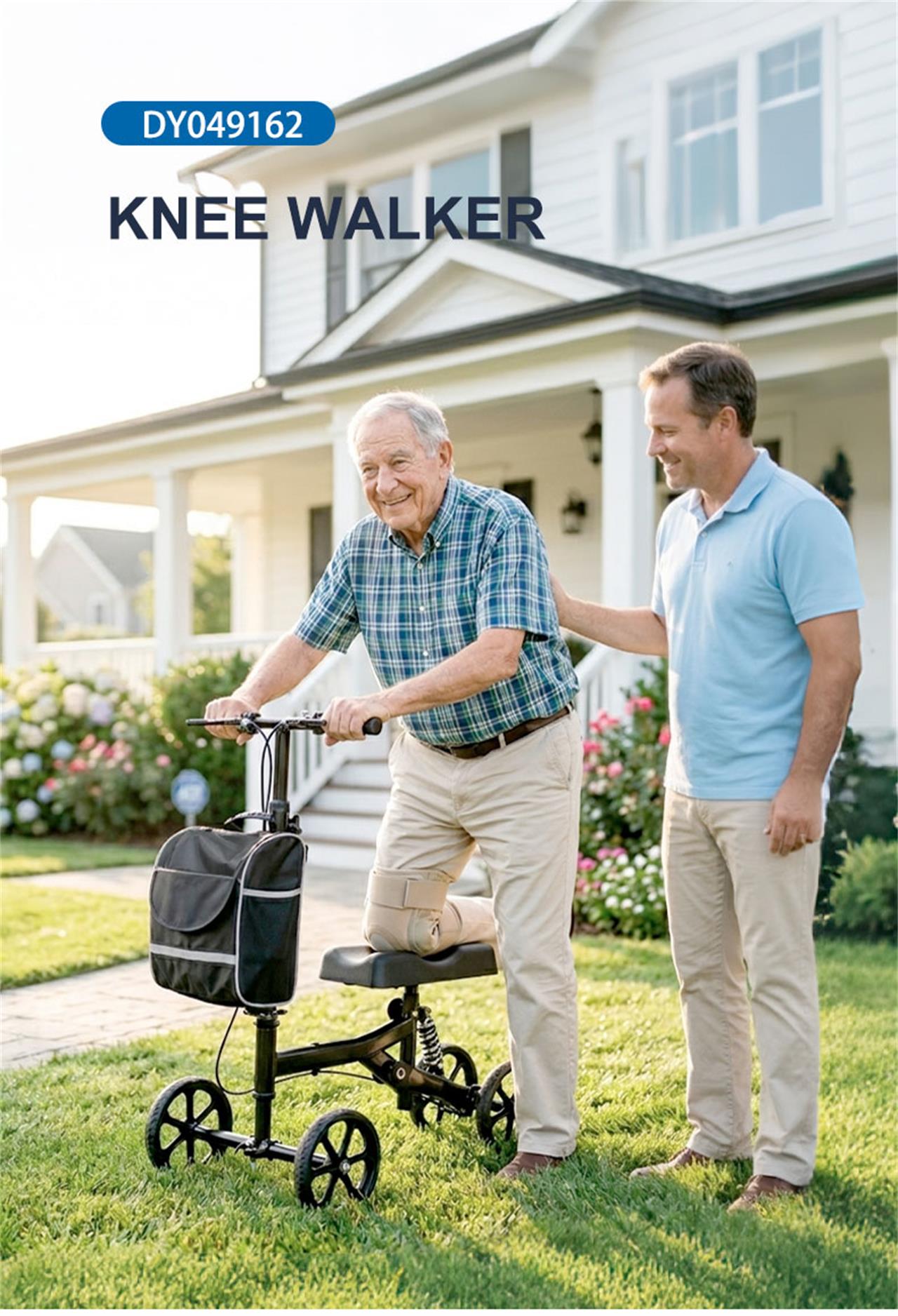
1. Rotate platform so its edge aligns with the frame on the side of your non-injured leg
2. Adjust platform height so your knee rests comfortably with a 90-degree bend
3. Set handlebar height to approximately waist level
4. Secure all pins and clamps firmly
Safe Usage Protocol
Mounting:
1. Grip handlebars and engage parking brake
2. Place injured leg on padded platform, centering the knee
3. Keep good foot firmly on the ground
Moving Forward:
1. Release parking brake
2. Keep both hands on handlebars
3. Push off gently with your good leg
4. Start slowly until balanced and confident
Stopping:
- Use your good foot to slow down and stop (hand brake maintains stopped stance)
- Once stopped, engage the parking brake
Dismounting:
1. Come to complete stop and engage parking brake
2. Step off with good leg first
3. Never use the walker to pull yourself up from a seated position
Critical Safety Tips
Essential Precautions:
- Wear a non-slip shoe on your non-injured foot at all times
- Never use near stairs or escalators
- Avoid sharp turns to prevent tipping
- Check clamps, pins, nuts, and bolts regularly
- Never exceed weight limitations
- Do not use under the influence of alcohol or medications that cause unsteadiness
Common Mistakes to Avoid:
- Overloading beyond weight capacity
- Improper foot placement on the platform
- Sharp turns at speed
- Attempting stairs or escalators
Practical Tips for Success
Before Surgery:
Receive your knee walker a few days before your procedure to adjust height, practice mounting, and build confidence before post-operative tenderness sets in.
Dress Appropriately:
- Wear sturdy, non-slip shoes on your good foot
- Avoid long, loose clothing that could catch in wheels
Home Preparation:
- Clear pathways of clutter
- Secure loose rugs and mats
- Create convenient resting spots throughout your home
Using Elevators:
Many experienced users recommend reversing into elevators to eliminate the need for a 3-point turn when exiting.
Mental and Emotional Wellbeing
Recovery affects more than physical mobility. Knee walkers provide psychological benefits:
- Independence Restoration: Move freely without relying on others for basic tasks
- Social Connection: Attend weddings, family gatherings, and social events you'd miss with crutches
- Positive Outlook: Maintaining activity levels supports mental wellbeing and accelerates recovery
Your Path to Pain-Free Mobility
A knee walker represents more than just a mobility aid—it is a tool for maintaining independence, dignity, and quality of life during a challenging recovery period. Clinical evidence overwhelmingly supports knee walkers as superior to crutches for most patients with below-knee injuries, offering greater comfort, stability, and satisfaction.
Whether preparing for surgery, recovering from an injury, or helping a loved one, understanding the capabilities and proper use of a knee walker empowers you to make informed decisions. The freedom to move safely, carry items, and maintain social connections during healing is invaluable—and with the right knee walker, that freedom is within reach.
Remember: Always consult with your healthcare provider or physical therapist before selecting a mobility aid to ensure it meets your specific medical needs and recovery requirements. Your recovery journey is unique, and the right equipment makes all the difference.